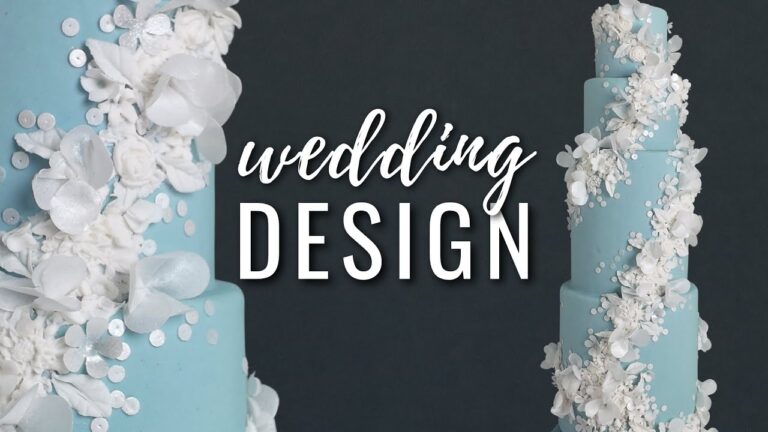
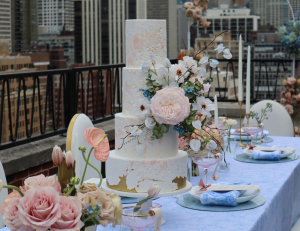
This wedding cake design checklist gives you three questions to answer before you present a design to your client.
With AI tools, endless social media posts, and a million ideas flying around, it is easy to think that designing better cakes means doing something more complicated.
More techniques.
More details.
More trends.
But when someone tells me she is unhappy with how her wedding cakes look, I rarely look at the decorations first.
I look at the basics.
Before adding another technique, use this three-step checklist.
Step 1: Check the shape
Before the flowers.
Before the color.
Before anything fancy.
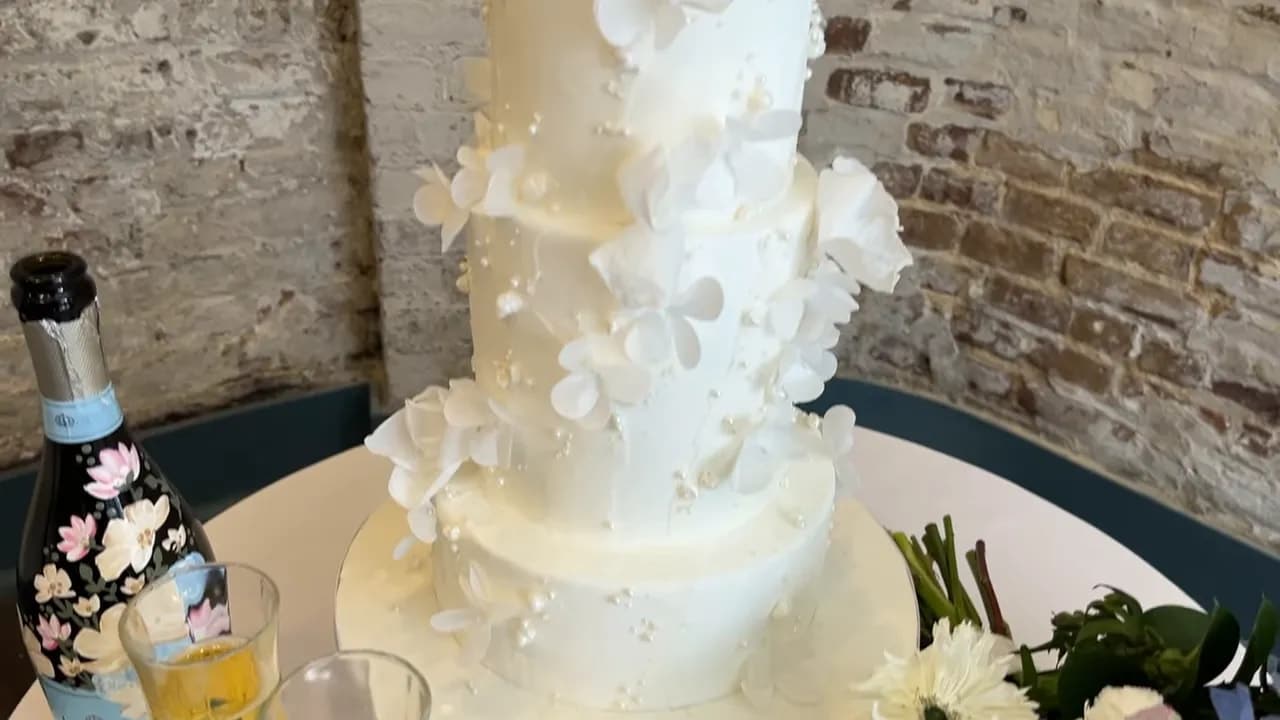
Look at the silhouette of the cake.
- Are the tiers balanced?
- Does the cake look top-heavy?
- Does the proportion feel intentional?
Our eyes are very sensitive to proportion.
A client may not be able to explain what feels wrong, but she will notice it immediately.
When a cake looks elegant and expensive, it usually starts with a pleasing shape.
Step 2: Simplify the color
If your cake feels busy, color may be the reason.
A rule I return to again and again is simple:
Use no more than three main colors.
Most of my designs live somewhere between maroon, ivory, and forest green.
I mix them, soften them, and change the tones, but I stay inside the same color family.
If you are unsure where to begin, mute the colors you already use.
- Softer pinks
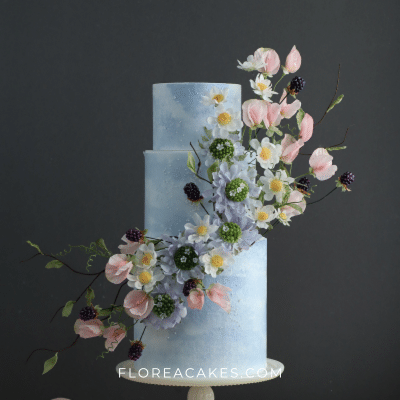
- Dustier blues
- Greens with a little gray or olive
Muted colors are forgiving.
They give every element room to breathe.
Step 3: Be honest about realism
If you want something to look realistic, it needs practice before it goes on a wedding cake or into your portfolio.
That is normal.
If you are still learning, give yourself permission to stay more abstract.
- Abstract wafer paper flowers
- Loose foliage
- Soft textures
- Movement instead of perfect precision
Abstract designs can look intentional at every stage of your skill.
Realism is less forgiving.
This one decision can protect your confidence while you develop stronger technical skills.
The whole system
Shape. Color. Realism.
That is the checklist.
You do not need to fix everything at once.
Start with the shape. Then simplify the color. Finally, decide how realistic the details need to be.
This is how I teach cake design inside the WAFER PAPER ACADEMY: foundations first, followed by practical techniques you can use to create wedding cakes that look polished and recognizably yours.
If your cakes already taste amazing and you want them to look more intentional, begin with these three decisions.
Save this checklist for the next time you design a cake.